
Choosing the wrong ACCA institute could cost you thousands of dirhams and months of your career progression. With dozens of training centers claiming to offer the best ACCA preparation in the UAE, making the right decision feels overwhelming. The stakes are high—your professional future depends on selecting an institute that doesn’t just teach the syllabus but equips you with the skills, knowledge, and confidence to excel in your ACCA exams and beyond. This comprehensive guide reveals 10 critical factors to help you identify the best ACCA Institute in UAE that aligns with your career goals.

The Association of Chartered Certified Accountants (ACCA) is a globally recognized professional accounting qualification that opens doors to lucrative career opportunities across 180+ countries. In the UAE’s thriving financial landscape, ACCA professionals are in high demand across banking, auditing, financial consulting, and corporate finance sectors.
ACCA offers unparalleled career advantages in the UAE:
Global Recognition and Mobility: ACCA credentials are respected worldwide, making you eligible for senior finance positions in multinational corporations operating across Dubai, Abu Dhabi, and other emirates. This international portability means your qualification remains valuable whether you’re working in the UAE or planning to relocate globally.
Competitive Salary Packages: ACCA-qualified professionals in Dubai earn significantly higher salaries compared to non-certified accountants. Entry-level ACCA affiliates can expect packages ranging from AED 8,000 to AED 12,000 monthly, while experienced ACCA members often command salaries exceeding AED 25,000 per month in senior management roles.
Accelerated Career Progression: The structured ACCA curriculum develops both technical accounting expertise and strategic business acumen. This dual competency makes ACCA holders prime candidates for fast-track promotions to CFO, Finance Director, and audit partner positions.
Industry Versatility: ACCA training prepares you for diverse finance roles beyond traditional accounting. Whether you’re interested in financial accounting, forensic auditing, risk management, or corporate taxation, ACCA provides the foundational knowledge you need.
For professionals wondering about finance careers in the UAE, ACCA represents one of the most strategic investments you can make in your professional development.

The institute you select for your ACCA preparation can be the difference between passing on your first attempt and struggling through multiple exam sittings. Here’s why your choice is critical:
Learning Methodology Impact: Quality institutes employ proven teaching methodologies that break down complex accounting principles into digestible concepts. They use a combination of theoretical instruction, practical application, and exam-specific techniques that significantly improve retention and understanding.
Financial Implications: ACCA exam fees, study materials, and tuition represent a substantial investment. Choosing an ineffective institute means potentially repeating exams (each retake costs additional fees), extending your qualification timeline, and delaying your return on investment.
Career Timeline Acceleration: The right institute helps you complete your ACCA qualification efficiently, allowing you to start reaping the career benefits sooner. Every semester you save translates to earlier salary increases and career advancement opportunities.
Professional Network Building: Reputable institutes connect you with fellow ACCA candidates, qualified mentors, and industry professionals. These relationships often lead to job opportunities, business partnerships, and valuable career guidance throughout your professional journey.
Employer Perception: Many UAE employers recognize graduates from top-tier ACCA institutes, giving you an edge during job interviews. Your institute’s reputation becomes part of your professional brand.
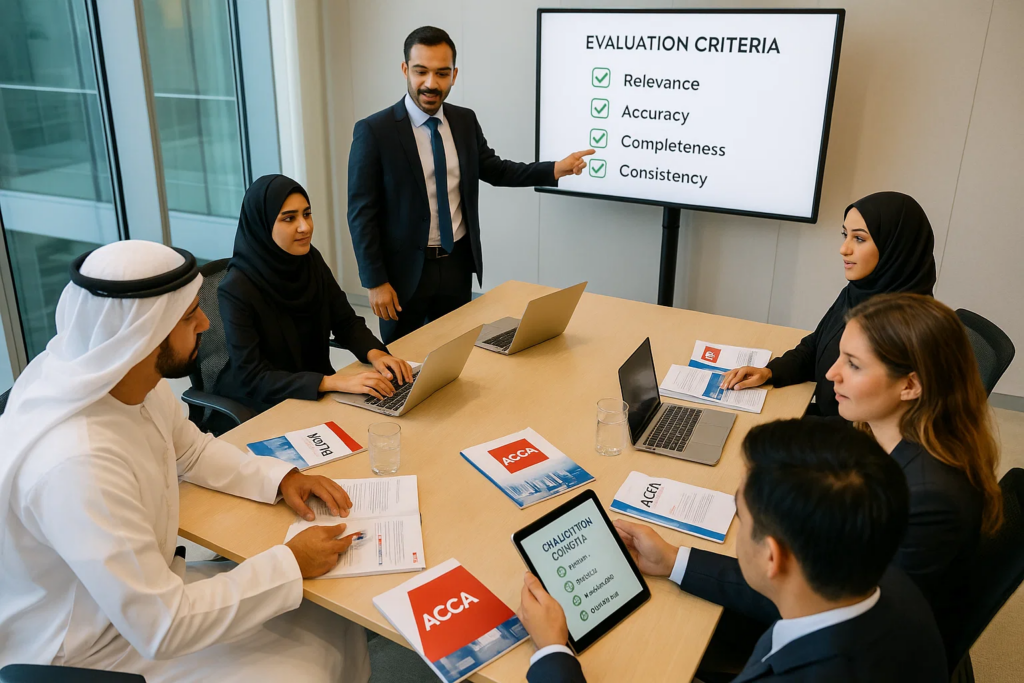
Why It Matters: ACCA-approved learning partners (Platinum, Gold, or Silver status) meet stringent quality standards set by the global ACCA body. This approval ensures the curriculum, teaching materials, and instructor qualifications align with official ACCA requirements.
What to Verify:
Red Flag: Institutes claiming to be “ACCA-affiliated” without official approval status often lack the necessary quality controls and may not provide syllabus updates aligned with current ACCA requirements.
Why It Matters: Your instructors should possess both ACCA qualification and real-world accounting experience. Theoretical knowledge alone isn’t sufficient—the best teachers combine technical expertise with practical insights gained from working in finance roles.
What to Evaluate:
Ideal Profile: Look for instructors who are ACCA members with at least 5+ years of practical accounting experience in UAE or GCC markets. They should demonstrate familiarity with accounting qualifications required in the UAE beyond just ACCA.
At Alifbyte’s ACCA program, instructors bring extensive industry experience from leading firms, ensuring you receive practical insights alongside exam preparation.
Why It Matters: An institute’s historical pass rates provide objective evidence of teaching effectiveness. While ACCA doesn’t publicly rank institutes, reputable centers willingly share their performance data.
Critical Questions to Ask:
Benchmark Standards: Global ACCA pass rates typically range from 40-50% depending on the paper level. Institutes consistently achieving 60-70%+ pass rates demonstrate superior teaching quality.
Transparency Matters: Be cautious of institutes that refuse to share pass rate data or only highlight selected success stories without providing comprehensive statistics.
Why It Matters: Quality study materials make complex accounting concepts accessible and exam-focused. Your institute should provide resources that complement ACCA’s official texts with additional practice questions, revision notes, and exam technique guidance.
Essential Resources to Expect:
Digital Learning Integration: Modern institutes leverage technology to enhance learning. Look for platforms that offer recorded lectures, interactive quizzes, discussion forums, and mobile-friendly content for studying on the go.
Why It Matters: Most ACCA candidates in the UAE are working professionals balancing careers with studies. The best institutes accommodate diverse schedules through multiple learning format options.
Format Options to Consider:
Weekend Classes: Perfect for full-time employees who need to maintain their current job while studying. Weekend batches typically run on Fridays and Saturdays, allowing you to dedicate your full attention to learning without work conflicts.
Evening Classes: Ideal for those who prefer spreading their study time across multiple days per week. Evening sessions (typically 6:30 PM – 9:30 PM) fit well after standard office hours.
Intensive Programs: Fast-track options for candidates who want to complete specific papers quickly or have time off from work. These programs compress learning into concentrated periods with daily classes.
Online Learning: Virtual classrooms offer maximum flexibility, eliminating commute time while providing live instruction, recorded sessions, and digital resources. This format suits remote workers or those with unpredictable schedules.
Hybrid Models: The ideal approach combines online flexibility with periodic in-person sessions for practical workshops, mock exams, and peer networking.
Alifbyte provides flexible scheduling options that work for busy professionals pursuing professional courses in Dubai alongside their careers.
Why It Matters: Understanding accounting concepts is necessary but insufficient—you need specific exam techniques to succeed in ACCA papers. The best institutes teach both content mastery and strategic exam approaches.
Effective Teaching Components:
Conceptual Foundation Building: Rather than rote memorization, quality instructors ensure you understand the “why” behind accounting principles, enabling you to apply concepts to unfamiliar scenarios in exams.
Exam Question Analysis: Breaking down past papers to identify examiner patterns, common pitfalls, and high-yield topics. This strategic approach helps you allocate study time efficiently.
Time Management Training: ACCA exams are time-pressured. Effective institutes conduct timed mock exams under exam conditions, teaching you to allocate minutes per question appropriately.
Written Communication Skills: Many ACCA papers require written responses. Quality programs help you structure answers professionally, use appropriate terminology, and present solutions clearly to maximize marks.
Scenario-Based Problem Solving: Moving beyond textbook examples to complex, multi-layered scenarios that mirror actual exam questions. This approach builds critical thinking skills essential for applied knowledge papers.
Why It Matters: ACCA is a challenging qualification with a high workload. Personalized support systems help you overcome obstacles, stay motivated, and maintain consistent progress toward completion.
Support Structures to Look For:
Academic Advisors: Dedicated staff who help you plan your exam strategy, recommend paper sequences, and provide guidance when you’re struggling with specific topics.
Small Class Sizes: Optimal learning occurs in classes of 15-25 students, allowing instructors to provide individualized attention and address specific questions thoroughly.
Doubt-Clearing Sessions: Regular office hours or supplementary sessions where you can get one-on-one explanations for challenging concepts without delaying the main class.
Peer Study Groups: Facilitated study circles where candidates collaborate, discuss concepts, and motivate each other. These groups often become valuable professional networks.
Mental Health and Motivation Support: Understanding that ACCA is a marathon, not a sprint. Quality institutes acknowledge the emotional challenges and provide encouragement during difficult periods.
Why It Matters: Consistent attendance is crucial for ACCA success. Convenient locations with quality facilities make it easier to maintain regular study schedules and focus during classes.
Location Considerations:
Proximity to Work or Home: Calculate total commute time to ensure classes don’t become a burden that leads to missed sessions. Look for institutes near major metro stations or well-served by public transport.
Multiple Branch Options: Institutes with locations across Dubai, Abu Dhabi, Sharjah, and other emirates offer flexibility if your work location changes or you relocate within the UAE.
Physical Infrastructure Quality:
Safety and Security: Especially important for evening classes, ensure the institute is located in a safe area with proper security measures.
Why It Matters: ACCA qualification is a means to career advancement. The best institutes recognize this and provide job placement assistance, industry networking, and career development resources.
Career Services to Expect:
Job Placement Assistance: Active recruitment partnerships with UAE accounting firms, multinational corporations, and government entities. Many institutes maintain job boards exclusively for their students.
Resume Building Workshops: Professional guidance on crafting compelling CVs that highlight your ACCA progress and relevant skills to UAE employers.
Interview Preparation: Mock interviews with feedback, common accounting interview questions practice, and presentation skills development.
Industry Guest Lectures: Regular sessions with finance professionals sharing insights about current trends, emerging technologies, and career pathways in UAE finance sector.
Alumni Network: Established alumni working across UAE industries who can provide mentorship, job referrals, and career advice. Strong alumni networks are indicators of an institute’s long-term reputation.
Internship Opportunities: Partnerships with firms offering practical experience while you’re completing your ACCA qualification, making you more competitive for full-time positions.
For guidance on starting your accounting career in the UAE, leveraging your institute’s career support services proves invaluable.
Why It Matters: ACCA preparation represents a significant investment. Understanding the complete cost structure upfront prevents unpleasant surprises and helps you budget effectively.
Comprehensive Cost Analysis:
Tuition Fee Breakdown:
Payment Flexibility:
Hidden Costs to Clarify:
Value Beyond Price: While affordability matters, the cheapest option isn’t always the best value. Calculate cost per successful paper passed rather than just upfront fees. An institute with 70% pass rates at slightly higher fees delivers better ROI than one with 40% rates at lower fees.
Comparative Shopping: Get detailed quotations from 3-4 institutes and compare what’s included. Some institutes appear expensive initially but include comprehensive materials and support that others charge extra for.

Recognizing warning signs can save you from costly mistakes. Avoid institutes that exhibit these characteristics:
Unrealistic Success Guarantees: No reputable institute can guarantee ACCA exam success. Claims like “100% pass rate” or “guaranteed first attempt success” are marketing gimmicks that indicate lack of professional integrity.
Pressure Sales Tactics: Quality institutes provide information and let you make informed decisions. High-pressure enrollment tactics, limited-time offers with artificial urgency, or representatives who discourage you from comparing other options are red flags.
Unclear Accreditation Claims: Vague statements about being “affiliated with” or “approved by” ACCA without specific approval status documentation suggest the institute may not have official recognition.
Outdated Curriculum: ACCA regularly updates its syllabus. Institutes using old textbooks, outdated case studies, or teaching methods that ignore recent changes won’t adequately prepare you.
Instructor Turnover: High faculty turnover disrupts learning continuity and suggests internal problems. Ask about instructor retention rates and how long current teachers have been with the institute.
Poor Online Reviews Pattern: While no institute has perfect reviews, patterns of complaints about the same issues (unresponsive staff, poor teaching quality, refund problems) indicate systemic problems.
No Trial Class Opportunity: Reputable institutes offer demo classes or consultation sessions, confident in their quality. Refusal to provide any sample of teaching style before commitment is suspicious.
Lack of Physical Presence: Online-only institutes without verifiable physical locations raise concerns about accountability and legitimacy, especially if you need to resolve disputes.
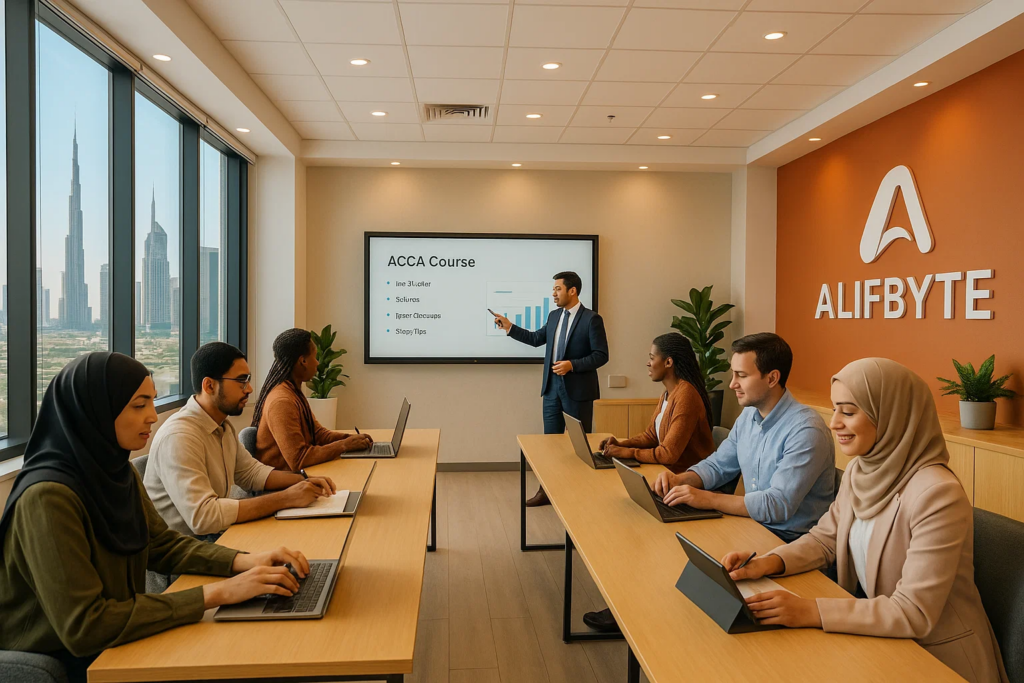
At Alifbyte, we understand that choosing the right ACCA institute shapes your professional future. Our comprehensive approach combines academic excellence with practical career preparation:
ACCA-Aligned Excellence: Our curriculum matches current ACCA requirements precisely, with instructors who bring real-world UAE accounting experience into every lesson. We don’t just teach accounting theory—we prepare you for actual workplace challenges you’ll face as a qualified professional.
Flexible Learning Designed for Working Professionals: Whether you prefer weekend intensive sessions or evening classes after work, our multiple schedule options ensure you can pursue accounting courses without compromising your current job. Our hybrid learning model combines in-person instruction with digital resources accessible 24/7.
Comprehensive Support Ecosystem: From your first exploratory call to your final ACCA paper, our dedicated advisors guide your journey. We provide personalized study plans, regular progress assessments, and additional support sessions when you need extra help with challenging topics.
Industry-Connected Career Development: Our partnerships with leading UAE accounting firms, multinational corporations, and financial institutions create job opportunities for our students. We regularly host networking events, bringing our candidates face-to-face with potential employers.
Technology-Enhanced Learning: Our digital platform provides recorded lectures for revision, extensive practice question banks, performance analytics to identify weak areas, and mobile-friendly content so you can study during your commute.
Proven Results: Our students consistently achieve above-average ACCA pass rates, with many receiving ACCA prizes for outstanding performance. These results reflect our commitment to quality instruction and comprehensive student support.
Holistic Skill Development: Beyond ACCA-specific content, we integrate training in essential professional skills. Our students learn advanced Excel for accountants, QuickBooks, Sage 50, and Tally Prime to ensure you’re workplace-ready from day one.
Complementary Certifications: Alongside ACCA, we help you build a comprehensive finance skill set. Consider pairing your ACCA qualification with our UAE VAT training or Corporate Tax training to specialize in high-demand areas of UAE taxation.
Transparent Pricing: Our fee structure is straightforward with no hidden charges. We offer flexible payment plans to make quality ACCA education accessible to ambitious professionals at all career stages.
Strategic Career Positioning: We understand the broader context of your career goals. Our advisors help you determine whether ACCA is the right path for your specific objectives or whether complementary certifications like CMCA (Certified Management and Cost Accountant) might better serve your needs.
Community Building: When you join Alifbyte, you become part of a community of ambitious finance professionals. Our alumni network spans major UAE corporations, providing ongoing mentorship, job referrals, and professional development opportunities long after you complete your qualification.
Many of our students appreciate the comprehensive support that extends beyond just exam preparation. We help you understand the top accounting skills needed to excel in your finance career and provide training to develop these competencies systematically.
ACCA qualification typically takes 2.5 to 4 years to complete, depending on your prior qualifications, exemptions, and study pace. Full-time students can complete faster, while working professionals usually need 3-4 years studying part-time. The qualification consists of 13 exams across three levels, plus 3 years of practical experience requirement.
Yes, many reputable UAE institutes offer online ACCA classes with live instruction, recorded lectures, and digital resources. Online learning provides flexibility for working professionals but requires strong self-discipline. The best approach combines online convenience with periodic in-person sessions for mock exams and practical workshops to maximize learning effectiveness.
No prior accounting background is required to start ACCA. The qualification begins with fundamentals, making it accessible to graduates from any discipline. However, students without accounting backgrounds should expect to invest additional study time initially. Some institutes offer foundation courses to help non-accounting graduates build prerequisite knowledge before starting the main ACCA papers.
Generally, students find Strategic Business Reporting (SBR), Advanced Audit and Assurance (AAA), and Advanced Performance Management (APM) among the most challenging ACCA papers. These strategic professional-level exams require advanced application, critical thinking, and written communication skills. However, difficulty is subjective—some students struggle more with calculation-heavy papers like Advanced Financial Management (AFM) or Taxation (TX).
For UAE careers, ACCA is often more advantageous than US CPA or Indian CA due to several factors: ACCA is specifically designed for international business contexts that match UAE’s global economy; it’s widely recognized by UAE employers across industries; and UK-based qualifications carry significant prestige in the Middle East. However, if you plan to work primarily in North America, CPA might be preferable.
ACCA exemptions allow you to skip certain exams if you have prior relevant qualifications. For example, commerce graduates may receive exemptions from 3-5 foundation papers, while qualified accountants from other bodies may get up to 9 exemptions. While exemptions reduce time and cost, they also mean less structured learning, so evaluate whether you have strong knowledge in exempted areas before claiming them.
Yes, most ACCA students in UAE work full-time while studying. The qualification is designed to accommodate working professionals through flexible study options. However, expect to dedicate 15-25 hours weekly to self-study beyond classes. Time management becomes crucial—many students take 2 papers per exam session (every 6 months) to balance work, study, and personal life effectively.
Practical experience is mandatory for ACCA membership. You need to complete 3 years (or 36 months) of relevant work experience in an accounting or finance role, which must be recorded and verified by a supervisor. This experience can be gained before, during, or after completing the exams. The practical experience requirement ensures ACCA members possess both theoretical knowledge and real-world competence.
ACCA qualification opens doors to diverse finance roles in UAE: Financial Accountant, Management Accountant, Financial Controller, Chief Financial Officer (CFO), Internal Auditor, External Auditor with Big 4 firms, Tax Consultant, Risk Manager, Treasury Analyst, Financial Analyst, Business Analyst, and Finance Director positions. The qualification is respected across industries including banking, real estate, hospitality, government, and consultancy.
Yes, ACCA membership requires annual subscription and Continuing Professional Development (CPD). After qualifying, you’ll pay annual membership fees (approximately £268 for members) and complete 40 hours of verifiable CPD activities annually. This ongoing requirement ensures ACCA professionals maintain current knowledge and adapt to evolving accounting standards and industry practices.
ACCA professionals in UAE typically earn competitive salaries comparable to other prestigious accounting qualifications. Entry-level ACCA affiliates start at AED 8,000-12,000 monthly, mid-level professionals earn AED 15,000-25,000, and senior ACCA members in CFO or Finance Director roles can command AED 35,000-60,000+ monthly. Salary depends on experience, industry, company size, and specific role responsibilities. For detailed salary information for accountants in Dubai, market research shows ACCA credentials significantly boost earning potential.
Choosing the best ACCA Institute in UAE is a decision that influences your career trajectory, earning potential, and professional satisfaction for years to come. Take time to research thoroughly, visit multiple institutes, attend trial classes, and speak with current students and alumni before committing.
Remember that the “best” institute isn’t necessarily the most expensive or the most advertised—it’s the one that aligns with your learning style, schedule, career goals, and budget while maintaining high academic standards and comprehensive support systems.
Your ACCA journey represents an investment in yourself and your future. Choose wisely, commit fully, and leverage all available resources to succeed. With the right institute supporting you, ACCA qualification becomes not just achievable but the foundation for an exceptional finance career in UAE and beyond.
Ready to take the next step? Explore Alifbyte’s ACCA program and discover how we can help you achieve your professional accounting aspirations. Our experienced advisors are ready to answer your questions, provide personalized guidance, and help you chart your path to ACCA success.
For comprehensive career preparation, also explore our other finance and accounting training programs designed to build a well-rounded skill set that sets you apart in UAE’s competitive job market.