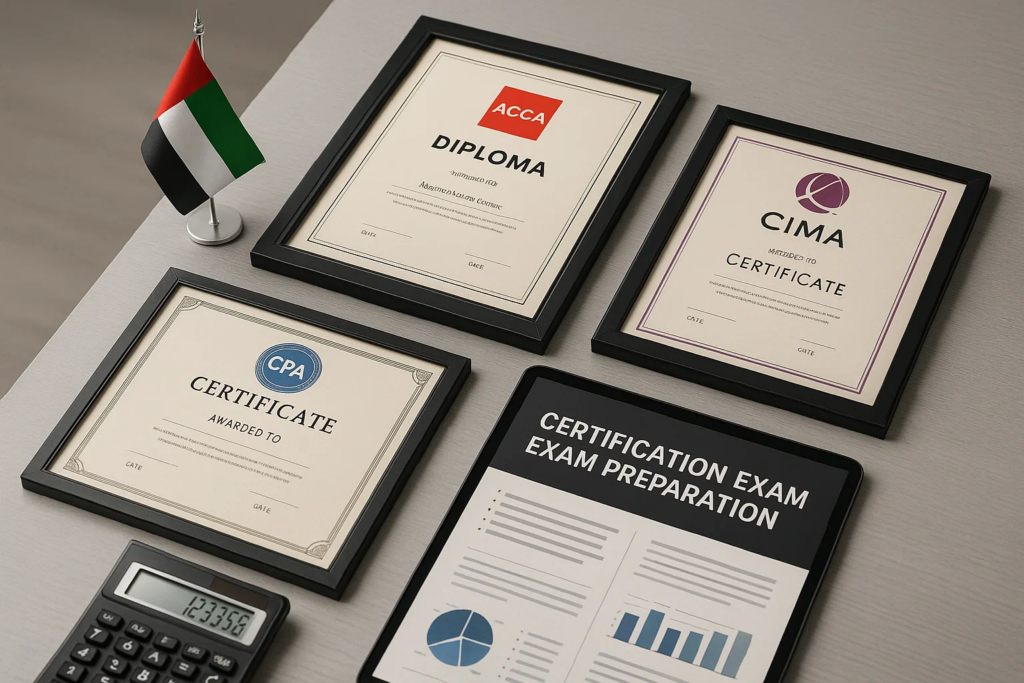
Are you considering a career in accounting in the UAE but feeling overwhelmed about where to begin? The UAE’s dynamic financial landscape offers exceptional opportunities for accounting professionals, but navigating the path to success requires strategic planning and the right qualifications. Without proper guidance, you might miss crucial steps that could accelerate your accounting career in this competitive market.
This comprehensive guide reveals exactly how to start an accounting career in UAE, covering everything from essential qualifications and certifications to job prospects and salary expectations. Whether you’re a fresh graduate, career changer, or experienced accountant looking to relocate to the Emirates, we’ll provide you with actionable insights to help you establish a successful accounting career in this thriving financial hub.
The UAE Accounting Landscape: Market Overview
The United Arab Emirates has established itself as a global financial hub, creating substantial demand for qualified accounting professionals across various sectors. The implementation of VAT in 2018 and Corporate Tax in 2023 has further increased the need for accounting expertise, making it an excellent time to pursue an accounting career in the region.
Key Market Trends
The UAE accounting sector is characterized by several key trends that shape career opportunities:
- Regulatory Evolution: The introduction of VAT and Corporate Tax has created high demand for tax specialists with local regulatory knowledge.
- Digital Transformation: Accounting functions are increasingly digitized, requiring professionals with both accounting knowledge and technological proficiency.
- International Standards Adoption: UAE businesses follow International Financial Reporting Standards (IFRS), creating opportunities for accountants with global expertise.
- Economic Diversification: As the UAE reduces dependence on oil revenues, new industries emerge, each requiring specialized accounting services.
- Emiratization Initiatives: Government programs encourage the employment of UAE nationals in the private sector, including accounting roles.
This dynamic environment creates diverse opportunities for accounting professionals at all career stages, from entry-level positions to senior leadership roles.
Essential Qualifications for Accountants in UAE
Building a successful accounting career in the UAE starts with obtaining the right academic credentials and qualifications. Employers in the UAE typically look for a combination of formal education, professional certifications, and practical skills.
Academic Requirements
Most accounting positions in the UAE require at minimum:
- Bachelor’s Degree: A degree in Accounting, Finance, Business Administration, or a related field is typically the minimum educational requirement.
- Master’s Degree: While not always mandatory, a Master’s in Accounting or an MBA with a Finance concentration can significantly enhance your employability and earning potential.
Technical Skills
Beyond academic qualifications, proficiency in accounting software and analytical tools is crucial:
- Accounting Software: Mastery of QuickBooks, Sage 50, and ERP systems like SAP or Oracle Financials is highly valued. Consider specialized training in QuickBooks and Sage 50 to enhance your technical credentials.
- Microsoft Excel: Advanced Excel skills are non-negotiable for accounting professionals. Develop expertise in financial modeling, pivot tables, and data analysis through programs like MS Excel for Accountants.
- Data Analysis Tools: Proficiency in Power BI and Power Query is increasingly important for modern accountants. Explore specialized Power BI and Power Query training to develop these in-demand skills.
Language Requirements
In the UAE’s multicultural business environment:
- English Proficiency: Strong English communication skills are essential, as English is the primary business language in most organizations.
- Arabic Knowledge: While not mandatory, basic Arabic language skills can provide a competitive advantage, especially for roles involving government entities or local businesses.
For non-native English speakers, enhancing your communication skills through Business English or Advanced English courses can significantly improve your employability.
Professional Accounting Certifications for UAE
Professional certifications dramatically enhance your marketability and earning potential in the UAE accounting sector. Different certifications open doors to specific career paths and industries.
Top Accounting Certifications Valued in UAE
- ACCA (Association of Chartered Certified Accountants)
- Widely recognized as the gold standard for accounting professionals in the UAE
- Comprehensive curriculum covering accounting, audit, taxation, and business law
- Learn more about building a global accounting career with ACCA
- CPA (Certified Public Accountant)
- Highly valued, especially for roles in multinational corporations and audit firms
- US CPA holders typically command premium salaries in the UAE market
- Provides strong credentials for senior finance positions
- CIMA (Chartered Institute of Management Accountants)
- Ideal for those targeting management accounting and financial strategy roles
- Focus on business management and strategic financial planning
- Particularly valued in commercial and industrial sectors
- CA (Chartered Accountant)
- Respected qualification, especially from UK, India, Pakistan, and Australia
- Strong foundation for audit and compliance roles
- Well-regarded for senior financial positions
UAE-Specific Certifications
Specialized certifications in local regulations can significantly enhance your employability:
- UAE VAT Certification: Demonstrates expertise in local Value Added Tax regulations, essential following the 2018 VAT implementation. Consider UAE VAT Training to develop this specialized knowledge.
- UAE Corporate Tax Training: With the recent introduction of corporate taxation, professionals with this expertise are in high demand. Explore Corporate Tax Training to gain a competitive edge.
- CMCA (Certified Management and Computerized Accounting): Combines management accounting principles with practical software skills specifically designed for the UAE market. Learn more about CMCA certification.
The right certification path depends on your career goals, industry preference, and existing qualifications. Many successful accounting professionals in the UAE hold multiple complementary certifications to maximize their career opportunities.
Developing Critical Accounting Skills
Beyond formal qualifications, developing certain core skills is essential for accounting success in the UAE market. These competencies will help you stand out from the competition and adapt to the evolving demands of the profession.
Technical Accounting Skills
- Financial Statement Analysis: The ability to interpret financial statements and derive meaningful insights
- Budgeting and Forecasting: Creating accurate financial projections and budget models
- Tax Compliance: Understanding UAE tax regulations including VAT and Corporate Tax
- Audit Preparation: Knowing how to prepare for and support internal and external audits
- Financial Controls: Implementing robust financial control systems and compliance processes
Soft Skills for Accounting Professionals
- Analytical Thinking: Breaking down complex financial problems into manageable components
- Attention to Detail: Ensuring accuracy in all financial calculations and reports
- Communication: Explaining financial concepts clearly to non-financial stakeholders
- Ethical Judgment: Maintaining high standards of integrity and professional ethics
- Adaptability: Staying current with evolving regulations and business practices
Emerging Skills for Future-Ready Accountants
- Data Analytics: Extracting insights from large financial datasets
- Process Automation: Identifying opportunities to streamline accounting workflows
- Digital Transformation: Supporting the transition to digital accounting systems
- Business Partnership: Providing strategic financial advice to support business decisions
- Sustainability Reporting: Understanding ESG (Environmental, Social, Governance) reporting requirements
Continuous skill development is essential in the fast-evolving UAE accounting landscape. Consider structured training programs to develop these critical competencies through accounting courses designed specifically for the UAE market.
How to Start Accounting Career in Dubai and Other Emirates
Starting an accounting career in Dubai and other emirates requires a strategic approach tailored to the unique characteristics of each location. While Dubai is the commercial hub, other emirates like Abu Dhabi, Sharjah, and Ras Al Khaimah offer distinct opportunities with their own industry specializations.
Dubai: Commercial and Financial Hub
Dubai’s status as a global business center makes it the most competitive market for accounting professionals, but also offers the widest range of opportunities:
- Financial Services Focus: Dubai is home to numerous banks, investment firms, and insurance companies, creating demand for accountants with financial services expertise.
- Multinational Headquarters: Many global corporations base their regional headquarters in Dubai, offering international exposure and career advancement opportunities.
- Professional Services Firms: All major accounting and consulting firms maintain substantial operations in Dubai.
- Free Zones: Dubai’s numerous free zones create specialized accounting opportunities, particularly in sectors like media, technology, and logistics.
For tailored guidance on how to start accounting career in Dubai, explore specialized accounting courses in Dubai that address the specific needs of this competitive market.
Abu Dhabi: Government and Energy Sector
Abu Dhabi offers distinct opportunities, particularly in:
- Government Entities: As the capital, Abu Dhabi hosts numerous government organizations requiring accounting professionals.
- Energy Sector: Home to major oil and gas companies with specialized accounting needs.
- Sovereign Wealth Funds: Organizations like ADIA and Mubadala create opportunities for investment accounting specialists.
Explore accounting training in Abu Dhabi to prepare for these unique opportunities.
Sharjah, Ajman, and Northern Emirates
These emirates offer growing opportunities with some distinct advantages:
- Manufacturing and Industrial Focus: Particularly in Sharjah, with specialized accounting needs for these sectors.
- Lower Competition: Often less competitive job markets than Dubai or Abu Dhabi.
- Cost Advantages: Lower living costs make these locations attractive for early-career professionals.
- Emerging Opportunities: Growing economic diversification creates new accounting roles in various sectors.
Each emirate has distinct characteristics that influence accounting career opportunities. Consider the specific industry focus and career prospects when deciding where to launch your accounting career in the UAE.
Job Hunting Strategies for UAE Accounting Positions
Securing an accounting position in the UAE requires a systematic approach to job hunting. The UAE job market has unique characteristics that influence your search strategy.
Resume and CV Optimization
Tailor your resume specifically for UAE accounting positions:
- Highlight Relevant Certifications: Prominently feature your ACCA, CPA, or other accounting certifications.
- Showcase Software Proficiency: Explicitly mention experience with accounting software and data analysis tools.
- Quantify Achievements: Include specific metrics and achievements from previous roles.
- Education Details: Include all relevant educational qualifications with grades/GPA if they’re favorable.
- Visa Status: If applicable, mention your current visa status in the UAE.
Effective Job Search Channels
Utilize multiple channels to maximize your job search effectiveness:
- Online Job Portals: Sites like LinkedIn, Bayt, GulfTalent, and Indeed UAE list numerous accounting positions.
- Recruitment Agencies: Specialized finance recruitment firms like Robert Half, Michael Page, and Hays have strong UAE presence.
- Company Websites: Many organizations post openings directly on their career pages.
- Networking Events: Finance and accounting professional networking events provide valuable connections.
- LinkedIn Optimization: Ensure your LinkedIn profile is complete, highlighting your accounting expertise.
Interview Preparation
Prepare thoroughly for UAE accounting interviews:
- Technical Knowledge: Review accounting principles, UAE tax regulations, and relevant standards.
- Case Studies: Practice analyzing financial statements and identifying issues.
- Cultural Awareness: Understand UAE business culture and demonstrate appropriate etiquette.
- Salary Expectations: Research typical compensation for your target role to negotiate effectively.
- Questions to Ask: Prepare thoughtful questions about the company’s financial processes and growth plans.
Entry Routes for Different Experience Levels
Your approach should vary based on your experience level:
For Fresh Graduates:
- Consider internships or trainee positions with accounting firms or corporate finance departments
- Highlight academic achievements and any practical experience gained during studies
- Demonstrate commitment to pursuing professional certifications
For Mid-Career Professionals:
- Emphasize specialized expertise and industry knowledge
- Highlight successful projects and quantifiable achievements
- Leverage existing networks and professional associations
For Experienced Accountants New to UAE:
- Research UAE-specific regulations and standards before interviews
- Highlight transferable skills and international experience
- Consider engaging with professional networks before relocating
The UAE accounting job market is competitive but offers substantial opportunities for well-prepared candidates with the right qualifications and approach.
Accounting Salaries and Career Progression in UAE
Understanding typical salary ranges and career paths helps set realistic expectations and develop effective career strategies. UAE accounting salaries vary widely based on qualifications, experience, industry, and specific emirate.
Typical Salary Ranges (Monthly in AED)
Entry-Level Positions:
- Junior Accountant: AED 5,000 – 10,000
- Accounts Assistant: AED 4,000 – 8,000
- Accounts Receivable/Payable Specialist: AED 6,000 – 12,000
Mid-Level Positions:
- Senior Accountant: AED 12,000 – 20,000
- Financial Analyst: AED 15,000 – 25,000
- Management Accountant: AED 18,000 – 28,000
Senior Positions:
- Finance Manager: AED 25,000 – 40,000
- Financial Controller: AED 30,000 – 50,000
- CFO/Finance Director: AED 50,000 – 80,000+
Impact of Certifications on Salary
Professional certifications significantly boost earning potential:
- ACCA Qualification: Typically commands a 20-30% salary premium at all career levels. Learn more about ACCA salary expectations in Dubai.
- CPA Certification: Often yields a 25-35% salary advantage, particularly in multinational corporations.
- CIMA Certification: Generally results in a 15-25% salary enhancement, especially in commercial sectors.
- UAE Tax Certifications: Can add 10-20% to compensation, particularly following recent tax implementations.
Career Progression Pathways
Typical career progression in UAE accounting follows these paths:
Corporate Accounting Path:
- Junior Accountant
- Accountant
- Senior Accountant
- Finance Manager
- Financial Controller
- Finance Director/CFO
Public Accounting Path:
- Audit/Tax Associate
- Senior Associate
- Manager
- Senior Manager
- Director
- Partner
Specialized Paths:
- Tax Specialist → Tax Manager → Tax Director
- Financial Analyst → Senior Financial Analyst → FP&A Manager → Finance Director
- Internal Auditor → Audit Manager → Chief Audit Executive
Benefits and Perks
Beyond base salary, UAE accounting positions typically offer:
- Housing allowance (or company accommodation)
- Transportation allowance
- Medical insurance
- Annual air tickets to home country (for expatriates)
- Performance bonuses
- Education allowances for children (senior positions)
Understanding the complete compensation package is essential when evaluating job offers in the UAE accounting sector.
Industry-Specific Accounting Opportunities
Different industries in the UAE offer unique accounting opportunities, each with specific requirements and career prospects. Identifying your target industry early allows you to develop relevant specialized skills.
Banking and Financial Services
The financial services sector offers numerous specialized accounting roles:
- Regulatory Reporting: Ensuring compliance with Central Bank regulations
- Treasury Accounting: Managing complex financial instruments and cash positions
- Product Control: Financial control for trading and investment banking activities
- Fund Accounting: Specialized accounting for investment funds and asset management
This sector typically offers competitive salaries but demands rigorous technical knowledge and often requires specialized certifications beyond basic accounting qualifications.
Oil, Gas, and Energy
The energy sector remains a significant employer in the UAE with distinctive accounting needs:
- Joint Venture Accounting: Managing complex partner arrangements in extraction projects
- Production Accounting: Tracking and reporting on resource production metrics
- Cost Accounting: Specialized focus on operational efficiency and project economics
- Compliance: Navigating complex international and local regulations
These roles often command premium salaries and may provide opportunities for international assignments within global energy companies.
Real Estate and Construction
With ongoing construction and property development across the UAE, this sector offers stable demand for accounting professionals:
- Project Accounting: Tracking costs and revenues for specific development projects
- Property Management Accounting: Financial management of income-generating properties
- Investment Analysis: Evaluating potential development opportunities
- Cost Control: Managing construction budgets and identifying variances
These roles benefit from understanding industry-specific accounting principles and often require knowledge of specialized software.
Retail and Hospitality
The UAE’s position as a tourism and shopping destination creates opportunities in:
- Inventory Accounting: Managing complex inventory systems for retail operations
- Revenue Management: Optimizing pricing and occupancy in hospitality businesses
- Multi-outlet Accounting: Consolidating financial data across multiple locations
- Operational Analysis: Identifying profitability drivers and efficiency opportunities
These sectors often provide good entry points for early-career accountants, with opportunities to develop specialized expertise.
Government and Semi-Government Entities
Public sector accounting offers unique career paths with distinctive requirements:
- Budgetary Control: Managing public funds within approved budgetary frameworks
- Compliance Accounting: Ensuring adherence to government financial regulations
- Program Accounting: Tracking expenditure and outcomes for specific initiatives
- Grant Management: Accounting for international aid and development funding
These positions often offer excellent stability and work-life balance, though sometimes with somewhat lower compensation than private sector equivalents.
Identifying your target industry early allows you to develop relevant specialized knowledge and skills, enhancing your marketability in that specific sector.
Continuing Education and Professional Development
The accounting profession is constantly evolving, particularly in the dynamic UAE market. Ongoing professional development is essential for career advancement and maintaining relevance in a changing landscape.
Professional Membership Organizations
Joining professional accounting bodies provides valuable development opportunities:
- ACCA UAE Network: Connects ACCA members and provides UAE-specific updates
- IMA (Institute of Management Accountants): Valuable for those in management accounting roles
- ICAEW Middle East: Networking and professional development for Chartered Accountants
- UAE Accountants and Auditors Association: Local professional body with UAE-specific focus
These organizations offer networking events, continuing education, and industry updates that keep you connected to developments in the profession.
Continuing Professional Education (CPE)
Most accounting certifications require ongoing CPE to maintain your credentials:
- Technical Updates: Courses on changing accounting standards and regulations
- Software Training: Workshops on emerging accounting and analysis tools
- Specialized Knowledge: Seminars on industry-specific accounting practices
- Soft Skills Development: Programs to enhance communication and leadership abilities
Plan your CPE strategically to address both requirements for maintaining certifications and skills needed for your next career move.
Advanced Specializations
Consider developing expertise in high-demand specializations:
- Data Analytics: Advanced courses in Data Analytics can open doors to business intelligence roles
- Digital Transformation: Understanding accounting automation and digital processes
- Sustainability Accounting: Emerging field focusing on ESG reporting requirements
- Forensic Accounting: Specialized skills for fraud investigation and prevention
- Financial Systems Implementation: Expertise in implementing and optimizing accounting systems
Specialized knowledge in these areas can differentiate you in the job market and lead to premium roles with higher compensation.
Executive Education
For those targeting senior leadership positions:
- MBA Programs: Consider part-time or executive MBA programs with finance specialization
- Leadership Development: Structured programs to enhance management capabilities
- Strategy Courses: Programs focusing on financial strategy and business partnership
- Board Preparation: Training for those aspiring to director-level financial positions
These advanced educational opportunities prepare you for the transition from technical accounting expert to financial leader.
Continuous learning is not optional but essential in the accounting profession. Allocate time and resources to ongoing development, viewing it as an investment in your long-term career success.
Challenges and Solutions for New Accountants in UAE
Breaking into the UAE accounting market presents specific challenges, particularly for newcomers to the profession or the region. Understanding these challenges and having strategies to overcome them increases your chances of success.
Common Challenges
Experience Requirements:
- Many UAE accounting positions require prior experience in the region
- Catch-22 situation for newcomers seeking their first position
Solution: Consider internships, trainee programs, or entry-level positions with growth potential. Volunteer experience with accounting responsibilities can also help build relevant experience.
Certification Recognition:
- Some international qualifications may not be fully recognized
- Employers often prefer specific certifications they’re familiar with
Solution: Research certification recognition before investing time and resources. Consider pursuing globally recognized qualifications like ACCA or supplementing existing certifications with UAE-specific training.
Visa Sponsorship:
- Most positions require employer sponsorship for work permits
- Limited options for self-sponsored job seekers
Solution: Focus on multinational employers and larger organizations more willing to sponsor visas. Consider educational pathways that include visa options as a stepping stone.
Cultural Adaptation:
- UAE business culture differs significantly from Western or other Asian contexts
- Understanding unwritten cultural norms is essential for workplace success
Solution: Invest time in understanding UAE business etiquette and cultural expectations. Consider cultural adaptation training and seek mentorship from those experienced in the market.
Language Barriers:
- Advanced English proficiency is expected in most accounting roles
- Arabic knowledge provides advantages in some contexts
Solution: Enhance your business English skills through specialized Business English courses. Consider basic Arabic language training to demonstrate commitment to the region.
Success Strategies
Networking Emphasis:
- UAE business culture values personal connections and recommendations
- Many positions are filled through networks rather than public postings
Strategy: Attend industry events, join professional associations, and leverage LinkedIn to build meaningful connections in the UAE accounting community.
UAE-Specific Knowledge:
- Understanding local regulations provides immediate value to employers
- VAT and Corporate Tax knowledge is particularly valuable
Strategy: Invest in UAE VAT Training and Corporate Tax Training to develop marketable specialized knowledge.
Technical Proficiency:
- Advanced technical skills can overcome limited local experience
- Software expertise creates immediate operational value
Strategy: Develop advanced skills in accounting software and data analysis tools through specialized training programs.
Continuous Adaptation:
- The UAE market evolves rapidly with regulatory and economic changes
- Adaptability is highly valued by employers
Strategy: Stay informed about UAE economic developments and demonstrate willingness to embrace change and continuous learning.
By anticipating these challenges and implementing effective strategies, you can overcome initial barriers and establish a successful accounting career in the UAE market.
FAQs: Starting an Accounting Career in UAE
What are the minimum qualifications needed to work as an accountant in UAE?
The minimum qualifications typically include a bachelor’s degree in accounting, finance, or a related field, along with basic proficiency in accounting software and English language skills. While not legally required, professional certifications like ACCA or CPA significantly enhance employability and are often expected for roles beyond entry level.
Do I need to know Arabic to work as an accountant in UAE?
Arabic knowledge is not mandatory for most accounting positions, as English is the primary business language in the UAE. However, basic Arabic skills can provide a competitive advantage, especially for roles involving interaction with local businesses or government entities.
What is the average salary for entry-level accountants in UAE?
Entry-level accounting positions in the UAE typically offer monthly salaries between AED 4,000-10,000 (approximately $1,100-2,700), depending on qualifications, employer size, and location. Dubai and Abu Dhabi generally offer higher compensation than other emirates.
Which accounting certification is most valued in the UAE job market?
ACCA (Association of Chartered Certified Accountants) is widely considered the most recognized and valued accounting qualification in the UAE. Other highly regarded certifications include CPA (particularly US CPA), CIMA, and CA. The best certification depends on your specific career goals and target industry.
How can I gain UAE accounting experience if I’m new to the country?
Consider internships, trainee programs, or entry-level positions with growth potential. Volunteering with accounting responsibilities for community organizations can also build relevant experience. Focus on developing UAE-specific knowledge through specialized training programs that include practical components.
What are the growth industries for accountants in UAE in 2025?
Growth industries for accountants include fintech, healthcare, e-commerce, sustainable energy, and digital transformation services. Government initiatives around economic diversification are creating new opportunities in technology, tourism, and logistics sectors, each requiring specialized accounting expertise.
Is it possible to find an accounting job in UAE from overseas?
Yes, it’s possible but challenging. Focus on multinational companies, participate in virtual networking events, and leverage online platforms like LinkedIn. Highlight any experience with international accounting standards and demonstrate knowledge of UAE business practices. Having specialized skills in high-demand areas improves your chances of securing employment from abroad.
How important is industry specialization for accounting careers in UAE?
Industry specialization becomes increasingly important as you advance in your career. While early roles may be generalist in nature, developing expertise in sectors like financial services, real estate, or energy can lead to premium positions with higher compensation. Consider your long-term goals when choosing which industry to focus on.
What software skills are most important for UAE accountants?
Essential software skills include advanced proficiency in Excel, experience with ERP systems (SAP, Oracle), and knowledge of accounting packages like QuickBooks and Sage. Increasingly, data analysis tools like Power BI and automation platforms are becoming valuable additions to an accountant’s technical toolkit.
How can I transition from another career into accounting in UAE?
Transitioning to accounting from another field typically requires obtaining relevant qualifications through academic degrees or professional certifications. Consider starting with courses like Accounting for Non-Accounting Professionals to build foundational knowledge, then pursue more advanced certifications. Highlight transferable skills from your previous career, especially analytical abilities and business acumen.
Conclusion
Starting an accounting career in the UAE offers tremendous opportunities for professional growth and financial rewards. By understanding the market landscape, obtaining the right qualifications, developing in-demand skills, and implementing effective job search strategies, you can position yourself for success in this dynamic market.
The UAE’s evolution as a global business hub continues to create strong demand for qualified accounting professionals across various industries and specializations. Whether you’re targeting a position in Dubai’s financial sector, Abu Dhabi’s government entities, or the growing commercial sectors of other emirates, a strategic approach to career development will maximize your prospects.
Remember that continuous learning and adaptation are essential in this fast-changing environment. Invest in ongoing professional development, stay current with regulatory changes, and build meaningful professional networks to ensure long-term career success.
Ready to Launch or Advance Your Accounting Career in the UAE?
Ready to launch or advance your accounting career in the UAE? Explore comprehensive
accounting courses
and professional development programs at
AlifByte Education
designed specifically for the UAE market. With the right preparation and approach, you can build a rewarding and lucrative accounting career in one of the world’s most dynamic business environments.
Accounting courses available in:
Abu Dhabi ·
Dubai ·
Ajman ·
Sharjah ·
Fujairah ·
Ras Al Khaimah ·
Umm Al Quwain